Core RAG & agent development
Organize retrieval, reasoning, tool calls and multi-step execution around business tasks. Connect documents, APIs and existing systems, with human confirmation for important actions and a record of execution.
AI AGENT & RAG ENGINEERING · HANGZHOU
Hands-on RAG and agent engineering, backed by a 20-person team spanning full-stack development, algorithms, data and QA.
Written Japanese / Meetings in English
From knowledge to agent action.
Documents · Knowledge · Business data
Retrieval · Inference · Tool integration
APIs · Business systems · Deliverables
01 / AGENT ENGINEERING
Team members bring hands-on experience implementing core RAG and AI-agent logic, and independently developing LLM tools for exam authoring and review.
MEMBERS’ HANDS-ON EXPERIENCEOrganize retrieval, reasoning, tool calls and multi-step execution around business tasks. Connect documents, APIs and existing systems, with human confirmation for important actions and a record of execution.
Team members bring experience with knowledge bases, knowledge graphs and exam-authoring tools. We can design document structure, source metadata and citation detail so users can return to the original evidence.
Connect model providers through authentication, routing, tenant isolation and usage records. Match models and context to the task, evaluating answer quality, response time and operating cost.
RAG / KNOWLEDGE ENGINEERING
Retrieval-augmented generation (RAG) finds relevant evidence in your information before a model composes an answer. We extend knowledge-base development into document governance, access control and evaluation, so the system can be checked and kept current.
Scope PDFs, Word documents, spreadsheets, web pages or business data. Define categories, owners and update rules, and establish which sources may be used in answers.
Handle OCR, layouts, headings and tables. Split content by meaning and business structure while preserving filenames, pages, sections and versions for source tracing.
Use keyword and vector retrieval, with query rewriting, metadata filters and reranking where needed. Test representative questions to find missing or irrelevant evidence.
Build answers from retrieved content with citations that locate the source. Define how to handle insufficient evidence, outdated documents and version conflicts, including clarification or human review.
Filter retrieval by user, department or tenant. Separate upload, approval and publication rights, and agree on addition, update, removal and index synchronization workflows.
Create an evaluation set of questions, reference answers and source evidence. Review retrieval, citations, answer quality, latency and cost, then iterate using feedback and failure cases.
Illustrative knowledge Q&A · Sample content
Retrieve the workflow for the purchase type and amount, with references to the applicable policy. If the amount is missing or multiple versions exist, clarify those details before giving guidance.
Purchasing policy · Approval workflow · Section 4
Purchase request guide · Required documents · Section 2
Help users understand the evidence, the applicable version and what to do next.
Scope is agreed around source formats, data permissions, existing systems and acceptance criteria.
Discuss a knowledge-base projectRECENT PRODUCT / WENQU EQ-AGENT
A recently developed, local-first agent product connecting source reading, question generation, review and output archiving. It integrates an open-source agent core with a domain-specific workflow.
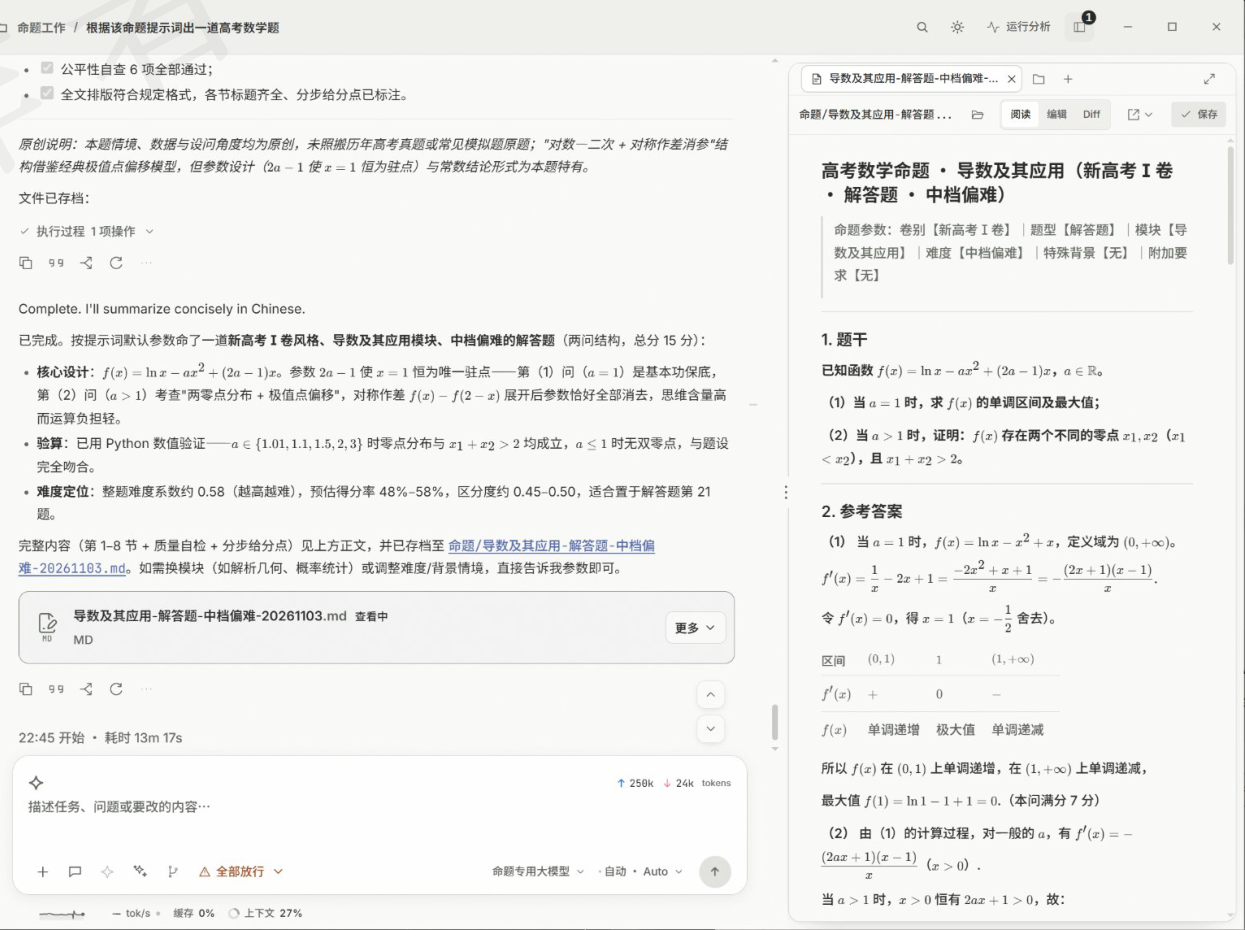
ENGINEERING FOCUS
File operations and validation steps, with coordinated planning and execution.
Structured expert workflows, quality standards and checklists for repeatable use.
Long-running task context, scoped permissions, approvals and execution records.
Workflows running in a local application, connected to intranet-hosted models.
The current case shows high-school mathematics question generation, self-checks and Markdown output.
02 / ENGINEERING CAPABILITIES
We define the scope and technical approach around your goals and existing environment.
Link answers to the source location and version for review.
Build searchable, traceable and maintainable knowledge bases for policies, product documentation, technical material and business questions, connected to your workflow.
Route low-confidence fields to a human reviewer.
Turn images, scanned documents and PDFs into usable business data, connecting human review with downstream processing to reduce repeated data entry.
Validate latency, throughput and resource cost at agreed loads.
Design inference environments around models, data boundaries and concurrency needs. Validate performance, stability and operating cost against available hardware and budget.
Check access controls and regressions across the UI, APIs and data flows.
Bring model capabilities into the systems people use every day, covering frontend, backend, data processing and testing.
For Japan-facing collaborations and existing systems, agree on scope, deliverables and customer acceptance for each stage.
Map business flows, system boundaries and exceptions. Align specifications, changes and acceptance criteria through written Japanese documentation.
Map dependencies and data structures, connect through APIs or batch jobs as appropriate, and plan data reconciliation and cutover rehearsals.
Set up API and regression tests within the agreed scope and add key checks to CI. Define how access, audit logs, releases and alerts will be handed over.
03 / THE TEAM
A stable capacity of 20 people. We assemble the right mix of roles for your project’s scope and stage.
Our team includes engineers with experience at Alibaba DAMO Academy’s Artificial Intelligence Center.
ENGINEERS & QA
Web · APIs · Integration
Models · Retrieval · Inference
Processing · Pipelines
Functional testing · Quality checks
Illustrative development scenes; these are not photographs of our team or office.

Align APIs and technical boundaries across full-stack, AI and data roles.
Compagnons / Unsplash ↗
Turn business needs into scope, acceptance criteria and an iteration plan.
Creatopy / Unsplash ↗
Connect development and QA around code, interfaces and running results.
Bernd Dittrich / Unsplash ↗04 / WORKING TOGETHER
Match the engagement to your scope, specialist needs and timeline.
We assemble a team to deliver an agreed scope, from development and validation through to handover.
Engineers join your development workflow for an agreed duration, with roles and capacity matched to your needs.
Align requirements and decisions in writing, with technical discussions in English.
05 / FROM BRIEF TO DELIVERY
Clarify workflows, challenges, priorities and your existing environment.
Define deliverables, responsibilities, milestones and validation methods.
Share progress and develop in stages, with testing throughout.
Review agreed outputs and transfer the information needed to operate them.
LET’S BUILD SOMETHING USEFUL
Your requirements, preferred timeline and the people you need. Let’s start with what you know.
The button opens your email application.